
Introduction
A single speck of dust on a resin tray. A faint fingerprint on a build plate. A microscopic fiber trapped between print layers. These minor contaminants can lead to failed prints, compromised mechanical performance, or costly rework in 3D printing and precision manufacturing environments.
As 3D printing evolves from prototyping to full-scale production across aerospace, medical devices, and industrial tooling, maintaining a controlled and contamination-free workspace has become mission-critical. Cleanroom wipes—properly selected and correctly used—play a pivotal role in this process.
Whether you're operating SLA, SLS, or metal powder systems, this guide will help you choose the right wipes to protect your prints, your equipment, and your bottom line.
Why Cleanroom Wipes Matter in 3D Printing
-
Avoid Print Defects: Dust, oils, and residue can lead to poor layer adhesion or failed prints.
-
Protect Sensitive Components: Optical sensors, nozzles, and resin vats are extremely sensitive to contaminants.
-
Prevent Cross-Contamination: Especially in multi-material printing setups or regulated industries (medical, aerospace).
Common Cleaning Scenarios
| Scenario | Risk | Recommended Wipe |
|---|---|---|
| Cleaning resin build plates | Sticky resin, streaks | Ultra-Fine Microfiber Wipes |
| Wiping metal powder printers | Particle contamination | Polyester Cleanroom Wipes (Laser-sealed) |
| Cleaning glass or PEI print beds | Fiber shedding | Lint-Free Polyester/Cellulose Blend Wipes |
| Static-sensitive components | ESD damage | ESD-Safe Cleanroom Wipes |
AAWipes Recommendations
Our best sellers for additive manufacturing and 3D printing environments:
-
🔹 MF18009 Wipes – Ideal for resin cleanup, optics, and print surfaces.
-
🔹 ESD16009 Wipes – Static-dissipative, ideal for electronics and sensitive printers.
-
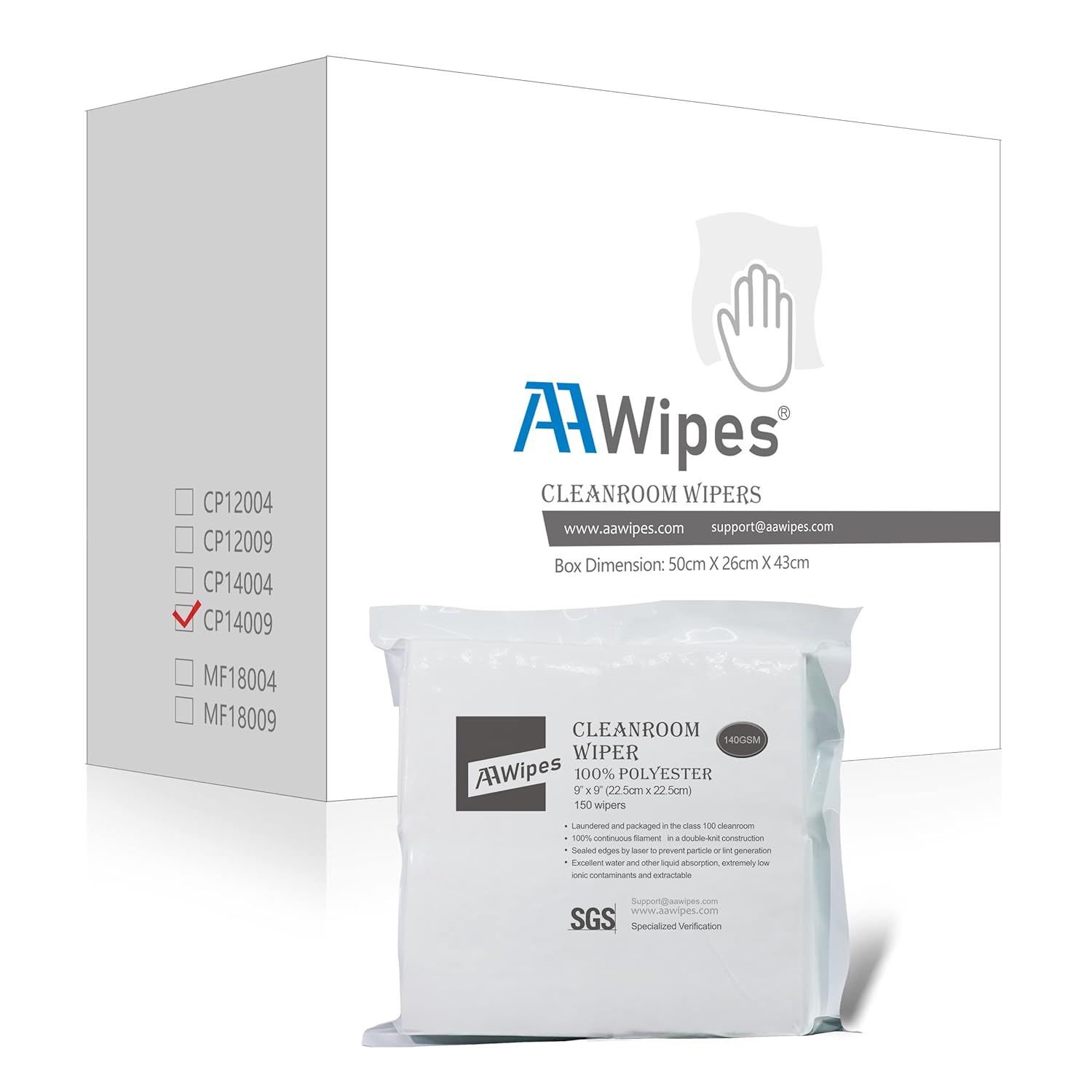
🔹 CP14006 Polyester Wipes – Double-knit, laser-cut, low-linting for ISO Class 5+ rooms.
👉 View the full collection here »
Real-World Use Cases
-
A precision 3D printing lab in Germany uses our microfiber wipes to clean high-end SLA printers used in medical prototyping.
-
An aerospace contractor uses ESD-safe wipes during post-processing of 3D-printed turbine components.
Tips for Using Cleanroom Wipes Effectively
-
Always use a cleanroom-compatible solvent (e.g., IPA 70%) with your wipe.
-
Wipe in one direction to avoid recontaminating cleaned surfaces.
-
Replace wipes frequently—don’t reuse or fold to clean multiple areas.
Conclusion
In high-precision 3D printing, one tiny fiber or particle can make the difference between a perfect print and a failure. Investing in the right cleanroom wipes ensures consistent quality, minimizes rework, and protects your equipment.
📦 Want a free sample? Contact us for evaluation packs or bulk order pricing.
🔗 Explore Cleanroom Wipes for 3D Printing »